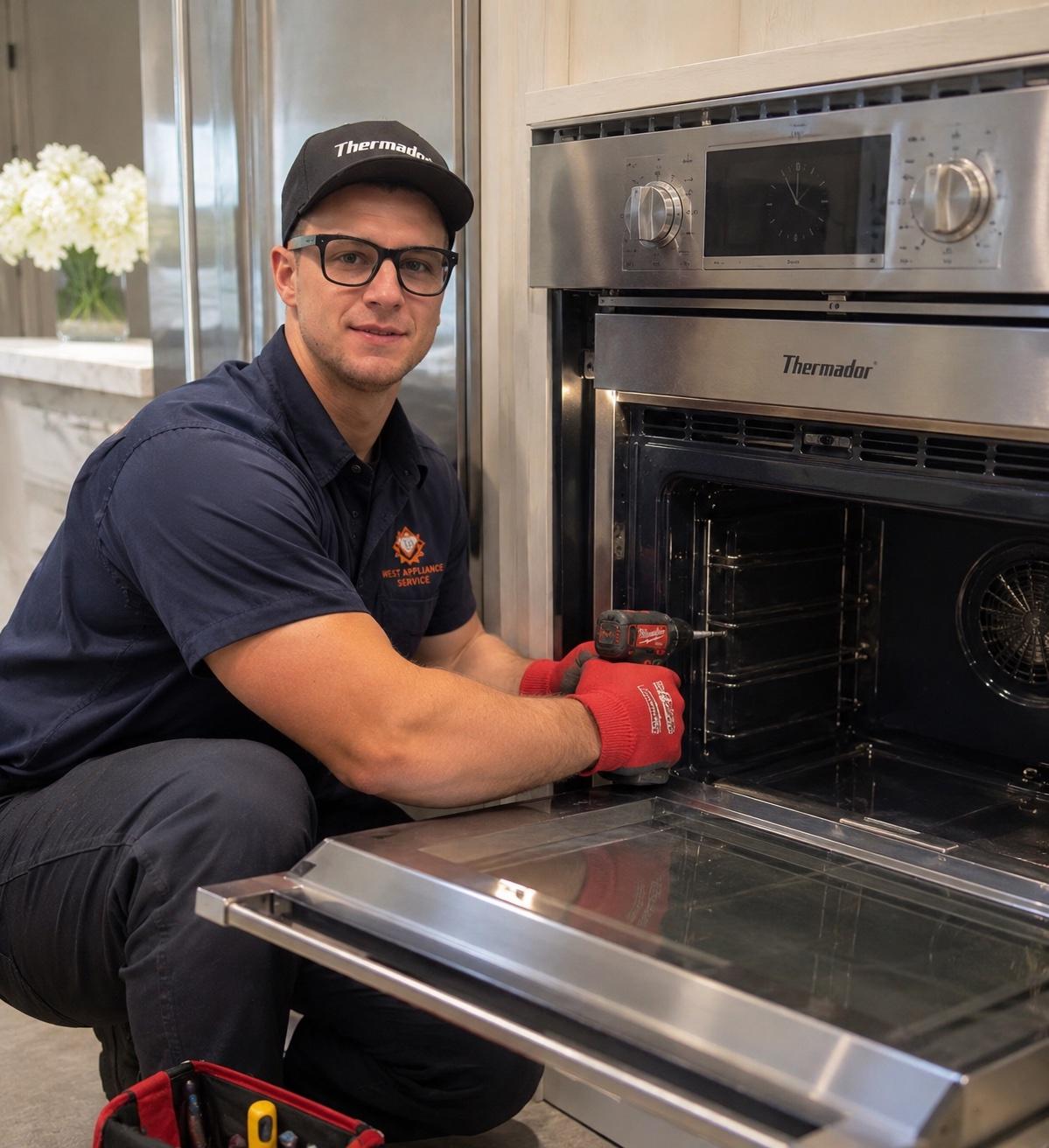
By West Appliance Service ·
Test the oven temperature early
Ovens can drift over time, and a few degrees off can mean a turkey that's dry outside and underdone inside. Place an oven thermometer in the center of the middle rack, set the oven to 350°F, and wait about 20 minutes after the preheat signal. Note the reading, then check again 15 to 20 minutes later, because ovens cycle above and below the set point. If the average lands within about 10 to 15 degrees, you're usually fine. Many ovens let you adjust a temperature offset through the settings, and your owner's manual explains how. If the oven won't reach temperature, takes much longer than usual to preheat, or a bake element shows a visible break or blister, the element, igniter or temperature sensor may be failing. Those parts are worth having diagnosed now rather than on Thanksgiving morning.
Check every burner on the range
Turn on each burner one at a time. On a gas range, the flame should be steady and mostly blue, with even flames around the whole ring. Yellow, lazy or uneven flames often point to a dirty or misaligned burner cap or clogged ports. With the range off and cool, lift the caps, wash them, clear the ports with a straightened paper clip rather than a toothpick that can break off, and let everything dry completely before reseating the caps squarely. Clicking that continues after a burner lights is often caused by moisture or a cap that isn't seated. On electric coil ranges, make sure coils sit firmly in their sockets and heat evenly. On glass cooktops, look for cracks, and don't use a cracked surface. If you smell gas that doesn't clear with the burners off, leave the house and call your gas utility from outside.
Think twice before running self-clean
A clean oven helps, but the self-clean cycle runs at very high heat, and that heat can push an aging thermostat, fuse, door lock or control board past its limit. A failure the week of Thanksgiving is the worst possible timing. If you plan to use self-clean, run it at least two weeks ahead so there's time to repair anything that goes wrong. Remove the racks unless your manual says they can stay, wipe out loose debris first, and open a window, since the cycle can produce smoke and odor. Keep pets, especially birds, out of the kitchen while it runs. As an alternative, a paste of baking soda and water spread on a cool oven, left for several hours and wiped out, handles most baked-on spills. Avoid spraying cleaners directly on gas igniters, heating elements or temperature sensors.
Get the refrigerator ready for extra food
Your refrigerator will hold more than usual this month, and an overpacked fridge can struggle to keep food cold. Put an appliance thermometer in a glass of water on a middle shelf overnight. The fresh food section should read 40°F or below, and the freezer should read 0°F. Clear out old leftovers and expired condiments now to make room, and keep the vents inside the compartment unblocked so cold air can circulate. Wipe the door gaskets with warm soapy water and check that the door closes firmly and seals all the way around. If you can reach the condenser coils, unplug the refrigerator first and vacuum the dust off them. Plan space for the turkey, too. A frozen bird usually needs about one day of thawing in the refrigerator for every four to five pounds, so it may need to go in several days ahead.
Know when to stop and call a technician
Some problems are not do-it-yourself jobs. Call a professional if you smell gas, see scorch marks or smell burning plastic near the oven controls, or the breaker trips when the oven or a burner turns on. On the refrigerator, warning signs include a unit that runs constantly but stays warm, heavy frost buildup on the back wall of the freezer, or a hissing sound or oily residue near the tubing, which can indicate a refrigerant leak. Refrigerant handling requires certified training, so never puncture or tamper with sealed lines. Don't remove panels on a gas appliance or touch wiring unless the power is off and you know exactly what you're doing. November is a busy month for appliance repair, so if something seems off, schedule a visit early instead of hoping it holds up through the holiday.
Common questions
How do I know if my oven temperature is accurate?
Place an oven thermometer on the middle rack, preheat to 350°F, and check the reading about 20 minutes after the preheat signal and again 15 to 20 minutes later. Ovens cycle up and down, so average the readings. If the oven is consistently more than about 15 degrees off, use the calibration setting or have it checked.
Why is my gas burner flame yellow or orange?
A yellow or orange flame often means the burner cap is dirty, misaligned or the ports are clogged with food or cleaner residue. Clean and dry the cap and ports, then reseat the cap squarely. If the flame stays yellow, produces soot, or you smell gas, stop using the burner and have it inspected.
Why is my refrigerator not cold enough?
Common causes include blocked interior vents, an overpacked compartment, worn door gaskets, dusty condenser coils, or a temperature setting that was bumped. Check those first and give it 24 hours. If it still reads above 40°F, runs nonstop, or the freezer builds frost, a fan, defrost part or sealed system problem may need a technician.
A little testing now can save your Thanksgiving dinner. Check the oven temperature, clean the burners, handle self-clean early, and confirm your refrigerator holds 40°F or below. If something still isn't working right, call West Appliance Service at (877) 775-4968. We're open 24/7 with same-day visits when the schedule allows, and the $95 diagnosis is credited toward the repair, so you can get it fixed before the holiday.