By West Appliance Service ·
How Wolf burner ignition works
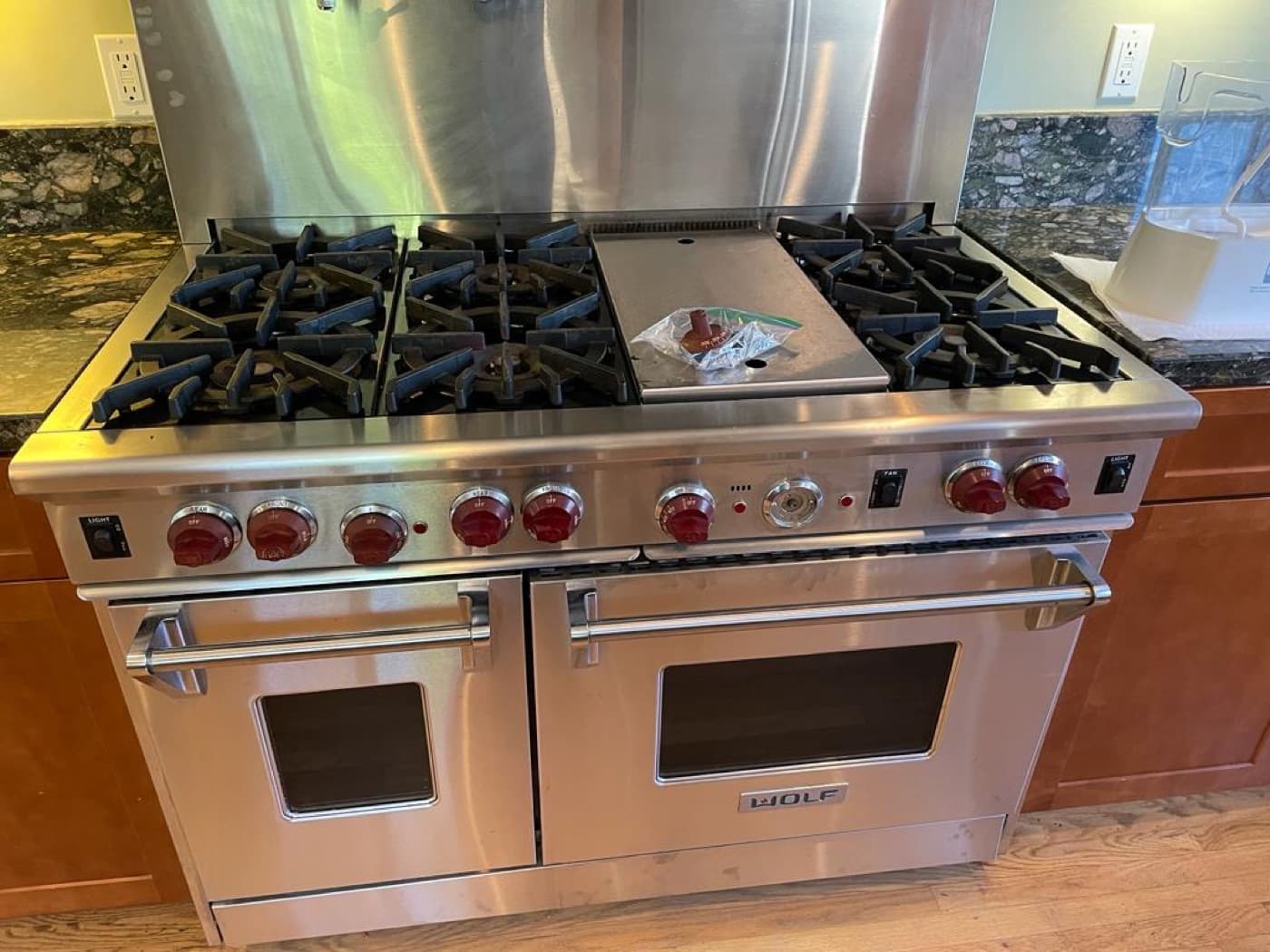
When you turn a knob on a Wolf gas rangetop or cooktop, a switch on the gas valve sends power to a spark module. The module sends a high-voltage pulse to small igniters, or electrodes, next to each burner, and you hear the familiar clicking. On many ranges, every igniter sparks at once even if you only turn one knob, which is normal. Once the gas lights, the clicking should stop within a few seconds. Many Wolf models also have an automatic reignition feature. If the system senses that a flame has gone out, it starts sparking again to relight the burner. That feature is helpful, but it also means that anything interfering with flame detection, such as dirt, moisture or a poorly placed burner cap, can make the igniter click nonstop even while the burner appears to be lit.
Common reasons a Wolf burner keeps clicking
The most frequent cause is moisture. Boil-overs, spills and cleaning with a wet sponge can leave water around the igniter or seep into the switch behind the knob. In the beach cities and South Bay, damp, salty air can add to the problem over time by corroding small electrical parts. Food residue and grease are another common cause. A crusted igniter or clogged burner ports can produce a weak or uneven flame that the system does not read correctly. A burner cap or base that is slightly off center after cleaning can also keep the flame from touching the igniter properly. Less often, the cause is a cracked igniter, a worn valve switch, a failing spark module, or a wiring, grounding or outlet polarity issue. If only one burner clicks, the problem is usually at that burner or its switch. If all of them click constantly, look closer at the switches or module.
Safe checks you can do at home
Start with the burners off and fully cool. If you plan to touch the igniters or remove parts, unplug the range or switch off its breaker first. Lift off the grate and burner cap, and wipe the igniter with a dry cloth or a soft toothbrush. Avoid soaking the area, and do not use abrasive pads on the igniter. Check the burner ports for blockages and clear them gently with a straightened paper clip, never a toothpick that can break off. Make sure the cap and base are dry, then set the cap back so it sits flat and centered. If you recently cleaned the cooktop or had a spill, let the range dry for several hours, or overnight, before testing again. Also confirm that each knob is fully in the off position, since a knob that is slightly turned can keep the switch engaged and the igniter sparking.
When clicking points to a deeper problem
If the burner is clean, dry and properly assembled and it still clicks, the cause is likely electrical or mechanical. A burner valve switch can wear out or stay damp inside, which keeps sending a signal to spark even with the knob off. An igniter can develop a hairline crack in its ceramic body that lets the spark jump to the wrong spot. The spark module itself can fail, causing constant clicking or no spark at all. Because the reignition system relies on sensing the flame electrically, an outlet that is miswired, has reversed polarity or lacks a proper ground can also make the igniters click continuously. Diagnosing these issues usually requires removing the knobs and top panel and testing with a meter near gas and high-voltage parts. This is the point where most homeowners should stop and have a technician take over.
Safety warnings to keep in mind
Constant clicking is usually more annoying than dangerous, but gas appliances call for caution. If you smell gas, do not turn any burners on or off, do not flip light switches, and do not unplug anything. Leave the home and call your gas utility or 911 from outside. Never try to light a Wolf burner with a match if the igniter is not producing a spark and you notice a strong gas odor, since gas may have built up. Turn the burner off and let the area air out first. The spark module produces high voltage, so always cut power before touching igniters or wiring. Do not spray cleaners directly onto the cooktop near the knobs, because liquid can run into the switches. If the clicking will not stop and you cannot use the range safely, turning off the breaker is a reasonable temporary step until it is repaired.
Common questions
Why does my Wolf burner click after I clean the cooktop?
Water or cleaner has most likely reached the igniter or the switch behind the knob. Remove the burner cap, dry the igniter and surrounding area with a cloth, and let the range sit for several hours or overnight. If the clicking stops once everything is dry, no repair is needed. In the future, use a damp, not wet, cloth near the burners.
Is it safe to use a Wolf burner that keeps clicking?
If the burner lights normally and you do not smell gas, using it briefly is generally not dangerous, though the constant sparking can wear parts over time. If the burner will not light, lights unevenly, or you notice a gas odor, turn it off and stop using it. Constant clicking with the knob off should be checked soon.
Why do all my Wolf burners click when I only turn on one?
On many gas ranges and cooktops, all igniters share one spark module, so every burner clicks when any knob is turned. That is normal as long as the clicking stops after the flame lights. If all burners keep clicking after lighting, or click with every knob off, a valve switch or the spark module may be faulty.
Most clicking Wolf burners settle down after a careful cleaning, thorough drying and a properly seated burner cap. If yours keeps clicking, will not light, or sparks with the knobs off, call West Appliance Service at (877) 775-4968. We are open 24/7 with same-day visits when the schedule allows. The $95 service call and diagnosis is credited toward the repair, and our work comes with a 90-day warranty.